


How to integrate Secure Privacy with Hubspot
This tutorial explains how to install Secure Privacy on a Hubspot website
What is Hubspot
HubSpot helps marketers manage all aspects of their inbound marketing, from SEO, blog posts, social media, marketing automation, personalization to segmentation.
Inbound marketing, in opposition to traditional or outbound marketing such as phone calls, direct mail and ads, is marketing by means of creating relevant content, that is search-friendly and attracts the customers to you.
How to make your Hubspot web pages GDPR complaint
Getting proper consent to the use of cookies from your visitors is a crucial part of rendering your website compliant with the GDPR. To be compliant, the consent has to be…
- Obtained prior to the setting of the cookies on the user’s browser (strictly necessary cookies are excepted from this rule)
- Given based on clear and specific information about what the consent is given to
- Withdrawable. The user must have access to their settings and make changes to what cookies they want to accept and reject.
- Kept as documentation that the consent has been given.
Installing Secure Privacy on Hubspot websites
To install Secure Privacy on Hubspot you can follow these simple steps
- Navigate to your HubSpot website and open it in Edit mode
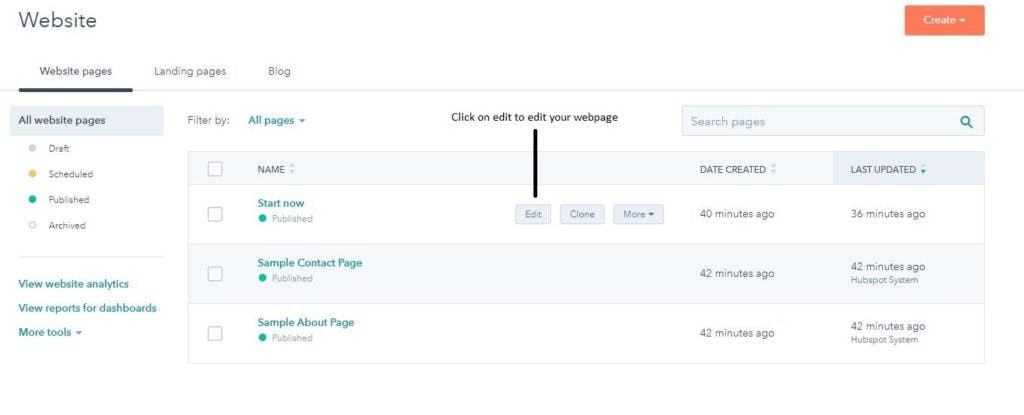
2. Go to Settings > Advanced options
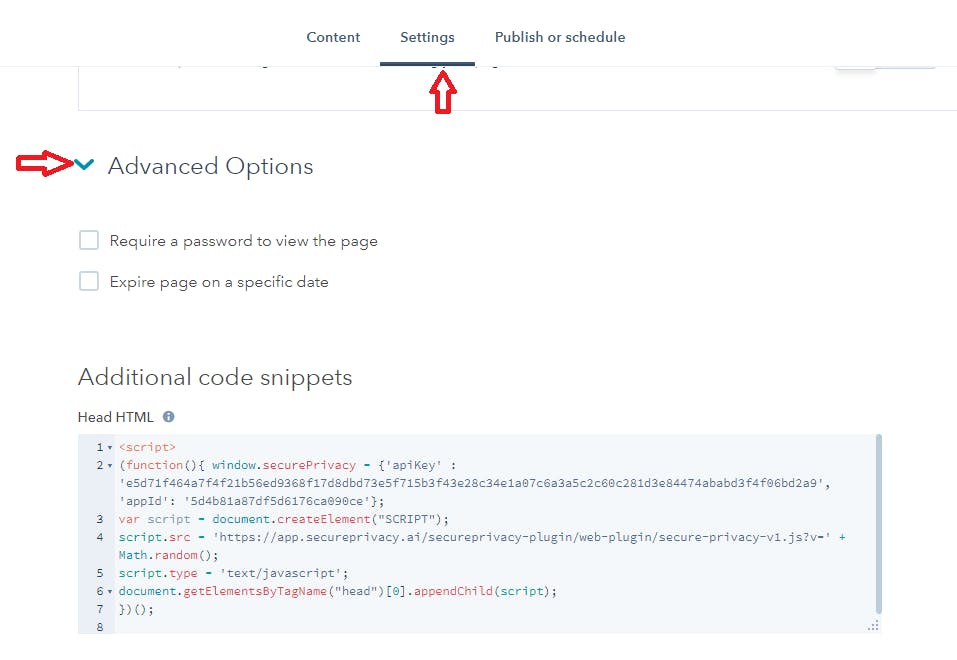
3. Paste your Secure Privacy code to "Additional code snippets.
4. Click on Publish to save your changes.
NOTE: Hubspot injects some cookies into the webpages which are essential for the website to work. It is not possible to block those cookies or plugins. You can move these cookies or plugins to the Essential category inside our admin app.
To block other cookies and plugins on HubSpot pages. You can follow this guide: Block cookies with JavaScript Rewrite
Other Tutorials
- How to integrate Secure Privacy with Hubspot
- How to install Secure Privacy with Google Tag Manager (GTM)
- How to install Secure Privacy on Wix
- Install Secure Privacy with Adobe Dynamic Tag Manager
- How to install Secure Privacy on SquareSpace
- How to install Secure Privacy on Joomla
- How to install Secure Privacy with Google Tag Manager (GTM)

How Do Companies Automate DSAR Workflows? (2026 Guide)
Honda paid $632,500. Todd Snyder paid $345,000. Both for the same underlying failure: opt-out mechanisms that didn't actually work. California's enforcement apparatus now funds itself: 95% of fines go back into enforcement. And with 36% of internet users worldwide having exercised their data subject rights in 2024 (up from 24% in 2022), the volume of requests hitting organizations that still manage DSARs manually is compounding faster than manual teams can absorb.
- Consent Management
What Is a Consent Management Platform? (And Why You Need One) [2026]
A consent management platform (CMP) is software that collects, stores, and enforces user consent for data processing across your website, app, and marketing stack: presenting visitors with privacy choices, recording their decisions in an audit-ready log, and signaling those preferences to every tool that touches their data.

How Does AI Governance Work Across the AI Lifecycle?
AI governance works by embedding a structured set of policies, controls, risk assessments, and accountability mechanisms into every stage of an AI system's life — from initial use-case approval through data collection, model development, deployment, and eventual retirement. It is not a one-time compliance gate before launch. It is a continuous operating discipline that runs in parallel with every technical decision the AI system makes. The goal is to ensure AI systems remain reliable, fair, explainable, and legally compliant as they evolve — and to produce the documented evidence that regulators, auditors, and customers can verify when they ask for proof.