


How Do Companies Automate DSAR Workflows? (2026 Guide)
Honda paid $632,500. Todd Snyder paid $345,000. Both for the same underlying failure: opt-out mechanisms that didn't actually work. California's enforcement apparatus now funds itself: 95% of fines go back into enforcement. And with 36% of internet users worldwide having exercised their data subject rights in 2024 (up from 24% in 2022), the volume of requests hitting organizations that still manage DSARs manually is compounding faster than manual teams can absorb.
The organizations still routing DSAR requests through email threads and spreadsheets aren't running a privacy program. They're running a liability.
The Direct Answer
Companies automate DSAR workflows by replacing manual, email-based intake with a connected system that handles every step — request capture, identity verification, data discovery across systems, SLA tracking, redaction, response delivery, and audit logging — without requiring a team member to manually coordinate each hand-off.
The result: requests that once took two weeks and cost an average of $1,524 each (Gartner) get fulfilled in days, with a complete, regulator-ready compliance record attached to every one.
Key Takeaways
- ➤ Manual DSAR fulfillment costs an average of $1,524 per request (Gartner); automation reduces that by up to 98% for organizations at volume.
- ➤ DSAR volume grew 43% from 2023 to 2024 (DataGrail, 2025); deletion requests — the most complex type — now make up 56% of all DSARs.
- ➤ As of January 2026, 19 U.S. states enforce comprehensive privacy laws with distinct response deadlines, making manual multi-jurisdiction SLA management operationally infeasible.
- ➤ 69% of organizations fire 3 or more cookie trackers despite visitors opting out (DataGrail audit, 2026) — the enforcement gap between stated compliance and actual system behavior is where CCPA fines are concentrating.
- ➤ A complete automated DSAR workflow covers 7 stages: structured intake, automated acknowledgment, identity verification, data discovery, smart routing, redaction, and audit trail generation.
Why Manual DSAR Handling Has Become Untenable in 2026
Between 2021 and 2024, CCPA-related data subject requests grew 246% (Termly, 2026). GDPR requests rose 222% over the same period. DataGrail's 2025 Data Privacy Trends Report documented a 43% increase in total DSAR volume from 2023 to 2024 alone — meaning a mid-sized company that processed 600 requests in 2023 was handling 860 by 2024.
Deletion requests — the most complex type, requiring confirmed removal across every connected system — now make up 56% of all DSARs, up 82% year-over-year (DataGrail, 2025).
Meanwhile, the average enterprise manages over 957 applications (Salesforce). Personal data lives across CRMs, data warehouses, HR systems, marketing automation platforms, support ticketing, analytics tools, and unstructured sources like email, Slack, and document stores. Locating all of it for a single deletion, confirming removal from each system, and producing an audit trail that proves it happened — manually — is no longer operationally viable.
As Transcend's 2026 enterprise guide to DSAR tools concluded: "Any manual step in that chain becomes a bottleneck as request volumes grow."
Three compounding pressures are accelerating automation adoption in 2026:
- Volume growth: DSAR requests are rising 40%+ year-over-year with no signs of slowing — and 36% of internet users worldwide exercised their data subject rights in 2024, nearly doubling the 2022 figure
- Regulatory expansion: As of January 2026, 19 U.S. states enforce comprehensive privacy laws, each with distinct response deadlines and right definitions
- Cost exposure: At $1,524 per manual request, an organization handling 500 DSARs per year spends over $760,000 annually on fulfillment that automation handles at a fraction of that cost
→ Understanding data subject rights in full: What you need to know about responding to DSARs
The 7 Stages of an Automated DSAR Workflow in 2026
Effective DSAR automation covers the full request lifecycle. Each stage that remains manual becomes a compliance liability.
Stage 1 — Structured Intake via Privacy Request Portal
Automated workflows begin with a purpose-built intake form — not a generic contact page or shared email inbox. A dedicated DSAR form:
- ➤ Presents clearly labeled request type options (access, deletion, correction, export, opt-out, restrict processing, object to processing, withdraw consent)
- ➤ Captures structured data fields: name, email, address, and request details
- ➤ Supports multiple languages, ensuring accessibility across jurisdictions
- ➤ Triggers the compliance clock the moment a valid submission is received
Key term: Data Subject Access Request (DSAR) — a formal mechanism through which individuals exercise privacy rights granted by laws such as GDPR (Articles 15–22), CCPA, LGPD, and 65+ other global frameworks. Every website that collects personal data from covered individuals is legally required to provide a functioning intake process for these requests.
Secure Privacy's DSAR module provides embeddable, branded request forms supporting 70+ languages and nine standardized request types aligned to GDPR and CCPA requirements. Forms are embedded on any web page via a lightweight JavaScript widget and can be linked to multiple domains, mobile apps, and TV apps from a single configuration. DSAR 2.0 introduces bulk management across properties, making multi-domain deployments significantly faster to administer.
→ Advanced DSAR form customization: Secure Privacy DSAR custom controls
Stage 2 — Automated Acknowledgment and SLA Clock Activation
The moment a request is received, an automated workflow should:
- ➤ Log the submission with a timestamp and unique request ID
- ➤ Send an acknowledgment to the requester confirming receipt and the expected response timeline
- ➤ Activate the regulatory deadline counter: 30 days under GDPR (extendable to 90 days for complex requests), 45 days under CCPA, 15 days under LGPD
Without automated SLA tracking, deadline management depends on someone checking a spreadsheet. At volume, that fails — and missed response windows are one of the most common triggers for supervisory authority complaints.
Stage 3 — Identity Verification
Before any personal data is disclosed or deleted, the organization must confirm the requester is who they claim to be — without collecting more information than necessary to do so.
Automated identity verification approaches include:
- ➤ Email confirmation: a verification link sent to the submitted address before the request is logged (recommended for GDPR compliance as a documented baseline)
- ➤ Tiered verification: lighter friction for lower-sensitivity requests (access), stronger verification for deletion or export where unauthorized fulfillment carries greater risk
- ➤ Authorized agent handling: when a third party submits on behalf of a data subject, requiring signed authorization verifying both the agent and the subject
Regulators have been explicit that verification must be proportionate — neither so light that fraudulent requests succeed, nor so burdensome that it de facto blocks legitimate rights exercise.
Secure Privacy supports automated email verification as part of the DSAR form configuration. When enabled, submitters complete an email confirmation step before their request enters the processing queue, creating a documented verification record per submission.
Stage 4 — Automated Data Discovery Across Systems
This is where manual workflows break down most completely — and where automation delivers the greatest compliance value.
A single deletion request may touch a CRM, an analytics database, a marketing automation platform, a support ticketing system, a data warehouse, and a third-party ad partner. Manually querying each system, coordinating with relevant data owners, and confirming removal is the most time-consuming part of DSAR fulfillment — and the most common source of incomplete responses.
Automated data discovery connects to an organization's integrated systems and:
- ➤ Locates all records associated with the data subject's identifiers (email, user ID, customer number)
- ➤ Maps those records to the relevant processing activities in the organization's data inventory
- ➤ Flags third-party processors who may also hold the data and need to be notified
- ➤ Confirms deletion or export completion across each connected system
Key term: Data discovery — the automated process of locating personal data across all of an organization's connected systems, including structured databases, SaaS tools, and unstructured sources such as email and documents. Without automated data discovery, DSAR fulfillment is inherently incomplete.
Stage 5 — Smart Routing and Task Assignment
Not every part of a DSAR can be handled by software alone. Automated workflow routing assigns the right tasks to the right people:
- ➤ Legal review for requests involving data subject objection or processing restriction
- ➤ Engineering involvement for technical deletion from production databases
- ➤ HR coordination for employee DSARs involving performance records or internal communications
- ➤ DPO review for high-risk or sensitive requests involving special category data under GDPR Article 9
Automation handles the routing logic — determining which teams need to act, triggering tasks, setting internal deadlines, and escalating if a step stalls — without manual triage at the center of each request.
Secure Privacy's Governance Portal connects intake to full lifecycle management: complete submission details, structured processing workflows, compliance dashboards, risk evaluation, and automated actions at scale. Submissions can be routed to the Governance Portal and simultaneously trigger email notifications to a designated team member or external recipient — including external DPOs, legal teams, or third-party privacy vendors who do not require a Secure Privacy platform login.
Stage 6 — Redaction and Secure Response Preparation
Before any data package is delivered to a requester, it must be reviewed for third-party personal data — information about other individuals that cannot be disclosed. This redaction step is where significant manual effort and compliance risk concentrates.
Automated redaction tools use AI-powered PII detection to:
- Identify third-party personal data that must be withheld
- Apply permanent redaction (not just visual masking) to documents, emails, and exported records
- Flag ambiguous cases for human review without halting the entire workflow
The redaction step accounts for 40–60% of the total cost of manual DSAR fulfillment (SafeRedact, 2026). Automation here alone can eliminate tens of thousands of dollars in annual processing costs for mid-volume organizations.
Stage 7 — Audit Trail and Compliance Documentation
Every step of the DSAR workflow — from receipt to verification to discovery to fulfillment — must be documented. When a supervisory authority investigates, or when a data subject challenges a response, the organization needs a complete, timestamped record of exactly what happened and when.
Automated DSAR platforms generate this audit trail as a byproduct of the workflow itself:
- Submission receipt timestamp and unique request ID
- Identity verification record and method
- Systems queried and results found
- Third-party processors notified
- Redactions applied and their rationale
- Response delivered, with delivery confirmation
- Any extensions invoked, with documented justification
Manual processes rarely produce records this complete. When they do, producing them for an audit requires hours of reconstruction. Automated audit logging makes them available on demand.
How Secure Privacy Automates DSAR Workflows End-to-End
Secure Privacy manages DSAR automation as an integrated component of its unified consent management and privacy governance platform — covering intake through audit trail without requiring separate tools stitched together.
DSAR Module: Intake and Form Management
Secure Privacy's DSAR 2.0 module is a dedicated, top-level workspace for creating and managing privacy rights intake forms.
Nine standardized request types cover the full rights landscape under GDPR and CCPA: access, export, deletion, correction, opt-out of data processing, restriction of processing, objection to processing, and consent withdrawal. All labels are fully editable to match organizational terminology.
Multi-property deployment assigns a single DSAR form to multiple domains, mobile apps, and TV apps simultaneously. Bulk management — bulk enable, bulk disable, bulk delete — makes multi-domain administration significantly faster.
Identity verification optionally requires submitters to confirm their email address before a request enters the processing queue, creating a documented verification record per submission.
Flexible routing with external recipient support sends submissions to the Governance Portal for structured compliance management, to a designated internal team member by email, or to an external DPO or legal team who does not need a Secure Privacy account. Both options can run simultaneously.
70+ language support with per-language label configuration ensures the form presents correctly in each jurisdiction.
Full setup documentation: Managing DSARs in Secure Privacy — Setup Guide
Governance Portal: Processing, Tracking, and Audit
The Secure Privacy Governance Portal connects intake to full lifecycle management with complete submission details, structured processing workflows with deadline tracking, risk and compliance evaluation per request type, automated actions at scale, and audit-ready records exportable for regulatory inquiries.
For small volumes and simple workflows, email-only routing from the DSAR module may be sufficient. For multi-domain organizations or those subject to regular regulatory audits, the Governance Portal provides the structured evidence layer regulators expect.
DPO-as-a-Service: Expert Oversight Built In
For organizations without dedicated in-house DPO capacity, Secure Privacy's DPO-as-a-Service provides on-demand Data Protection Officer expertise — managed DSAR monitoring, breach response guidance, regulatory interpretation — connected directly to the platform's workflow infrastructure.
→ How DSAR management fits into the broader privacy governance stack: GDPR software solutions
Regulatory Deadlines Your DSAR Automation Must Track in 2026
A company operating across the EU, California, and Brazil faces three different regulatory clocks running on the same request if a data subject is covered by multiple laws. Manual SLA management across that matrix is not feasible. An automated DSAR platform tracks deadlines per-request, per-regulation.
The current deadline matrix:
GDPR (EU / UK) — 30 days from receipt, extendable by a further 60 days for complex or high-volume requests with prior notification to the data subject.
CCPA / CPRA (California) — 45 days, extendable by an additional 45 days with notice. California's enforcement apparatus now funds itself from fines (95% of penalties fund further enforcement), making this the highest-risk jurisdiction for missed deadlines.
LGPD (Brazil) — 15 days. The shortest mandatory deadline of any major framework; requires automation to be reliably met at scale.
PDPA (Thailand) — 30 days, with case-dependent extensions.
PIPEDA (Canada) — 30 days, with provision for reasonable extensions.
U.S. state laws (19 states, January 2026) — 30 to 45 days depending on the state, with varying extension provisions. Indiana, Kentucky, and Rhode Island joined the enforcement landscape in January 2026.
DSAR Automation Checklist
Use this to audit your current process or evaluate a platform before purchase.
Intake
- [ ] Purpose-built DSAR portal — not a generic contact form or shared email inbox
- [ ] All right types covered: access, deletion, correction, portability, opt-out, restriction, objection, consent withdrawal
- [ ] 70+ language support with per-jurisdiction label configuration
- [ ] Compliance clock activated automatically on valid submission receipt
Identity Verification
- [ ] Email verification loop creating a documented record per submission
- [ ] Tiered verification available for higher-risk request types
- [ ] Authorized agent handling with signed authorization requirement
SLA Tracking
- [ ] Per-request deadline counter, jurisdiction-aware
- [ ] Automated escalation if internal steps stall before deadline
- [ ] Extension workflow documented and triggered within the platform
Data Discovery
- [ ] Automated scan across all connected systems — CRM, analytics, HR, marketing automation, support ticketing
- [ ] Third-party processor notification triggered automatically
- [ ] Deletion confirmation collected per system before response is issued
Routing and Fulfillment
- [ ] Rules-based routing to legal, engineering, HR, DPO as required by request type
- [ ] External DPO or legal team can receive and process requests without platform login
- [ ] AI-assisted redaction with permanent PII removal before response delivery
Audit Trail
- [ ] Every step timestamped automatically — receipt, verification, discovery, routing, redaction, response
- [ ] Exportable records available on demand for regulatory inquiry
- [ ] Delivery confirmation logged per response
FAQ
What types of requests does a DSAR automation system need to handle?
A complete system handles the full range of data subject rights: access (Subject Access Request), erasure (right to be forgotten), portability, rectification, restriction of processing, objection, and withdrawal of consent. Under CCPA, this includes the right to know, right to delete, right to correct, right to opt out of sale or sharing, and the right to non-discrimination. Platforms like Secure Privacy configure nine standardized request types covering all of these scenarios, with fully editable labels per language.
How does DSAR automation handle employee requests?
Employee DSARs are among the most complex — and account for 66.8% of all DSARs organizations receive, typically arriving during workplace disputes (Mimecast, 2026). Employee data is distributed across HR systems, performance management tools, internal communications platforms, email archives, and collaboration tools. Automated discovery must reach these internal systems, and routing logic must direct requests to HR and legal before response. Organizations with significant employee request volumes need automation that includes internal systems in discovery scope, not just customer-facing data stores.
What is the difference between a standalone DSAR tool and a privacy management platform?
A privacy management platform covers the full operational scope: consent management, data mapping, vendor risk, PIAs, policy management, and DSAR handling. A standalone DSAR tool only handles request fulfillment. The integrated approach delivers more value: when your DSAR module connects to your live data map and consent records, data discovery is faster, the audit trail is richer, and there is no duplication of effort between systems.
How do automated systems handle multi-language DSAR submissions?
Multi-language handling requires the intake form to present in the requester's language and the response to be delivered in a language they can understand. Platforms like Secure Privacy support 70+ languages with per-language label configuration, and allow the embed script's data-lang attribute to be set per page for jurisdiction-specific deployments. Response templates should be maintained in each relevant language separately.
What happens when a DSAR involves a third-party processor?
Under GDPR Article 28, data controllers must notify sub-processors of deletion requests and obtain confirmation of removal. Automated workflows handle this by identifying which third-party processors hold the data subject's records from the data map, triggering notification workflows, and tracking confirmation responses. Without this step, a deletion response is technically incomplete — and regulators have pursued enforcement specifically on this gap.
How do we know if our current DSAR process would survive a regulatory audit?
The test is specific: can you produce, within minutes, the complete record of how any individual DSAR was handled — receipt timestamp, verification method, systems searched, data found, redactions applied, response sent, and delivery confirmed? If that reconstruction requires searching email threads or manual spreadsheet review, the process is not audit-ready. Automated platforms generate that record as standard output.
Is DSAR automation only for large enterprises?
No. The regulatory obligation applies regardless of company size — GDPR, CCPA, and equivalent laws apply to any organization processing covered personal data. Modern platforms including Secure Privacy offer tiered pricing scaling from single-domain small businesses through large enterprise deployments. The case for automation is especially strong for lean teams: a two-person privacy function handling 50 manual DSARs per month is spending the equivalent of a full working week on fulfillment that automation handles as background process.
What does DSAR automation cost compared to manual processing?
At $1,524 per manual request (Gartner), an organization handling 200 DSARs per year spends approximately $304,800 on fulfillment. Organizations using AI-powered DSAR platforms report up to 98% reductions in per-request processing costs (Redactable, 2026). Companies that invest proactively in DSAR compliance save an average of $2.3 million annually in avoided fines and legal costs. The automation ROI case is almost always positive within the first year.
Related Content
- How Secure Privacy Automates DSAR Workflows End-to-End
- Secure Privacy manages DSAR automation as an integrated component of its unified consent management and privacy governance platform — covering intake through audit trail without requiring separate tools stitched together.
DSAR Module: Intake and Form Management
Secure Privacy's DSAR 2.0 module is a dedicated, top-level workspace for creating and managing privacy rights intake forms.
Nine standardized request types cover the full rights landscape under GDPR and CCPA: access, export, deletion, correction, opt-out of data processing, restriction of processing, objection to processing, and consent withdrawal. All labels are fully editable to match organizational terminology.
Multi-property deployment assigns a single DSAR form to multiple domains, mobile apps, and TV apps simultaneously. Bulk management — bulk enable, bulk disable, bulk delete — makes multi-domain administration significantly faster.
Identity verification optionally requires submitters to confirm their email address before a request enters the processing queue, creating a documented verification record per submission.
Flexible routing with external recipient support sends submissions to the Governance Portal for structured compliance management, to a designated internal team member by email, or to an external DPO or legal team who does not need a Secure Privacy account. Both options can run simultaneously.
70+ language support with per-language label configuration ensures the form presents correctly in each jurisdiction.
Full setup documentation: Managing DSARs in Secure Privacy — Setup Guide
Governance Portal: Processing, Tracking, and Audit
The Secure Privacy Governance Portal connects intake to full lifecycle management with complete submission details, structured processing workflows with deadline tracking, risk and compliance evaluation per request type, automated actions at scale, and audit-ready records exportable for regulatory inquiries.
For small volumes and simple workflows, email-only routing from the DSAR module may be sufficient. For multi-domain organizations or those subject to regular regulatory audits, the Governance Portal provides the structured evidence layer regulators expect.
DPO-as-a-Service: Expert Oversight Built In
For organizations without dedicated in-house DPO capacity, Secure Privacy's DPO-as-a-Service provides on-demand Data Protection Officer expertise — managed DSAR monitoring, breach response guidance, regulatory interpretation — connected directly to the platform's workflow infrastructure.
→ How DSAR management fits into the broader privacy governance stack: GDPR software solutions
Regulatory Deadlines Your DSAR Automation Must Track in 2026
A company operating across the EU, California, and Brazil faces three different regulatory clocks running on the same request if a data subject is covered by multiple laws. Manual SLA management across that matrix is not feasible. An automated DSAR platform tracks deadlines per-request, per-regulation.
The current deadline matrix:
GDPR (EU / UK) — 30 days from receipt, extendable by a further 60 days for complex or high-volume requests with prior notification to the data subject.
CCPA / CPRA (California) — 45 days, extendable by an additional 45 days with notice. California's enforcement apparatus now funds itself from fines (95% of penalties fund further enforcement), making this the highest-risk jurisdiction for missed deadlines.
LGPD (Brazil) — 15 days. The shortest mandatory deadline of any major framework; requires automation to be reliably met at scale.
PDPA (Thailand) — 30 days, with case-dependent extensions.
PIPEDA (Canada) — 30 days, with provision for reasonable extensions.
U.S. state laws (19 states, January 2026) — 30 to 45 days depending on the state, with varying extension provisions. Indiana, Kentucky, and Rhode Island joined the enforcement landscape in January 2026.
DSAR Automation Checklist
Use this to audit your current process or evaluate a platform before purchase.
Intake
- [ ] Purpose-built DSAR portal — not a generic contact form or shared email inbox
- [ ] All right types covered: access, deletion, correction, portability, opt-out, restriction, objection, consent withdrawal
- [ ] 70+ language support with per-jurisdiction label configuration
- [ ] Compliance clock activated automatically on valid submission receipt
Identity Verification
- [ ] Email verification loop creating a documented record per submission
- [ ] Tiered verification available for higher-risk request types
- [ ] Authorized agent handling with signed authorization requirement
SLA Tracking
- [ ] Per-request deadline counter, jurisdiction-aware
- [ ] Automated escalation if internal steps stall before deadline
- [ ] Extension workflow documented and triggered within the platform
Data Discovery
- [ ] Automated scan across all connected systems — CRM, analytics, HR, marketing automation, support ticketing
- [ ] Third-party processor notification triggered automatically
- [ ] Deletion confirmation collected per system before response is issued
Routing and Fulfillment
- [ ] Rules-based routing to legal, engineering, HR, DPO as required by request type
- [ ] External DPO or legal team can receive and process requests without platform login
- [ ] AI-assisted redaction with permanent PII removal before response delivery
Audit Trail
- [ ] Every step timestamped automatically — receipt, verification, discovery, routing, redaction, response
- [ ] Exportable records available on demand for regulatory inquiry
- [ ] Delivery confirmation logged per response
FAQ
What types of requests does a DSAR automation system need to handle?
A complete system handles the full range of data subject rights: access (Subject Access Request), erasure (right to be forgotten), portability, rectification, restriction of processing, objection, and withdrawal of consent. Under CCPA, this includes the right to know, right to delete, right to correct, right to opt out of sale or sharing, and the right to non-discrimination. Platforms like Secure Privacy configure nine standardized request types covering all of these scenarios, with fully editable labels per language.
How does DSAR automation handle employee requests?
Employee DSARs are among the most complex — and account for 66.8% of all DSARs organizations receive, typically arriving during workplace disputes (Mimecast, 2026). Employee data is distributed across HR systems, performance management tools, internal communications platforms, email archives, and collaboration tools. Automated discovery must reach these internal systems, and routing logic must direct requests to HR and legal before response. Organizations with significant employee request volumes need automation that includes internal systems in discovery scope, not just customer-facing data stores.
What is the difference between a standalone DSAR tool and a privacy management platform?
A privacy management platform covers the full operational scope: consent management, data mapping, vendor risk, PIAs, policy management, and DSAR handling. A standalone DSAR tool only handles request fulfillment. The integrated approach delivers more value: when your DSAR module connects to your live data map and consent records, data discovery is faster, the audit trail is richer, and there is no duplication of effort between systems.
How do automated systems handle multi-language DSAR submissions?
Multi-language handling requires the intake form to present in the requester's language and the response to be delivered in a language they can understand. Platforms like Secure Privacy support 70+ languages with per-language label configuration, and allow the embed script's data-lang attribute to be set per page for jurisdiction-specific deployments. Response templates should be maintained in each relevant language separately.
What happens when a DSAR involves a third-party processor?
Under GDPR Article 28, data controllers must notify sub-processors of deletion requests and obtain confirmation of removal. Automated workflows handle this by identifying which third-party processors hold the data subject's records from the data map, triggering notification workflows, and tracking confirmation responses. Without this step, a deletion response is technically incomplete — and regulators have pursued enforcement specifically on this gap.
How do we know if our current DSAR process would survive a regulatory audit?
The test is specific: can you produce, within minutes, the complete record of how any individual DSAR was handled — receipt timestamp, verification method, systems searched, data found, redactions applied, response sent, and delivery confirmed? If that reconstruction requires searching email threads or manual spreadsheet review, the process is not audit-ready. Automated platforms generate that record as standard output.
Is DSAR automation only for large enterprises?
No. The regulatory obligation applies regardless of company size — GDPR, CCPA, and equivalent laws apply to any organization processing covered personal data. Modern platforms including Secure Privacy offer tiered pricing scaling from single-domain small businesses through large enterprise deployments. The case for automation is especially strong for lean teams: a two-person privacy function handling 50 manual DSARs per month is spending the equivalent of a full working week on fulfillment that automation handles as background process.
What does DSAR automation cost compared to manual processing?
At $1,524 per manual request (Gartner), an organization handling 200 DSARs per year spends approximately $304,800 on fulfillment. Organizations using AI-powered DSAR platforms report up to 98% reductions in per-request processing costs (Redactable, 2026). Companies that invest proactively in DSAR compliance save an average of $2.3 million annually in avoided fines and legal costs. The automation ROI case is almost always positive within the first year.
Related Content
- How Secure Privacy Automates DSAR Workflows End-to-End
- Secure Privacy manages DSAR automation as an integrated component of its unified consent management and privacy governance platform — covering intake through audit trail without requiring separate tools stitched together.
DSAR Module: Intake and Form Management
Secure Privacy's DSAR 2.0 module is a dedicated, top-level workspace for creating and managing privacy rights intake forms.
Nine standardized request types cover the full rights landscape under GDPR and CCPA: access, export, deletion, correction, opt-out of data processing, restriction of processing, objection to processing, and consent withdrawal. All labels are fully editable to match organizational terminology.
Multi-property deployment assigns a single DSAR form to multiple domains, mobile apps, and TV apps simultaneously. Bulk management — bulk enable, bulk disable, bulk delete — makes multi-domain administration significantly faster.
Identity verification optionally requires submitters to confirm their email address before a request enters the processing queue, creating a documented verification record per submission.
Flexible routing with external recipient support sends submissions to the Governance Portal for structured compliance management, to a designated internal team member by email, or to an external DPO or legal team who does not need a Secure Privacy account. Both options can run simultaneously.
70+ language support with per-language label configuration ensures the form presents correctly in each jurisdiction.
Full setup documentation: Managing DSARs in Secure Privacy — Setup Guide
Governance Portal: Processing, Tracking, and Audit
The Secure Privacy Governance Portal connects intake to full lifecycle management with complete submission details, structured processing workflows with deadline tracking, risk and compliance evaluation per request type, automated actions at scale, and audit-ready records exportable for regulatory inquiries.
For small volumes and simple workflows, email-only routing from the DSAR module may be sufficient. For multi-domain organizations or those subject to regular regulatory audits, the Governance Portal provides the structured evidence layer regulators expect.
DPO-as-a-Service: Expert Oversight Built In
For organizations without dedicated in-house DPO capacity, Secure Privacy's DPO-as-a-Service provides on-demand Data Protection Officer expertise — managed DSAR monitoring, breach response guidance, regulatory interpretation — connected directly to the platform's workflow infrastructure.
→ How DSAR management fits into the broader privacy governance stack: GDPR software solutions
Regulatory Deadlines Your DSAR Automation Must Track in 2026
A company operating across the EU, California, and Brazil faces three different regulatory clocks running on the same request if a data subject is covered by multiple laws. Manual SLA management across that matrix is not feasible. An automated DSAR platform tracks deadlines per-request, per-regulation.
The current deadline matrix:
GDPR (EU / UK) — 30 days from receipt, extendable by a further 60 days for complex or high-volume requests with prior notification to the data subject.
CCPA / CPRA (California) — 45 days, extendable by an additional 45 days with notice. California's enforcement apparatus now funds itself from fines (95% of penalties fund further enforcement), making this the highest-risk jurisdiction for missed deadlines.
LGPD (Brazil) — 15 days. The shortest mandatory deadline of any major framework; requires automation to be reliably met at scale.
PDPA (Thailand) — 30 days, with case-dependent extensions.
PIPEDA (Canada) — 30 days, with provision for reasonable extensions.
U.S. state laws (19 states, January 2026) — 30 to 45 days depending on the state, with varying extension provisions. Indiana, Kentucky, and Rhode Island joined the enforcement landscape in January 2026.
DSAR Automation Checklist
Use this to audit your current process or evaluate a platform before purchase.
Intake
- [ ] Purpose-built DSAR portal — not a generic contact form or shared email inbox
- [ ] All right types covered: access, deletion, correction, portability, opt-out, restriction, objection, consent withdrawal
- [ ] 70+ language support with per-jurisdiction label configuration
- [ ] Compliance clock activated automatically on valid submission receipt
Identity Verification
- [ ] Email verification loop creating a documented record per submission
- [ ] Tiered verification available for higher-risk request types
- [ ] Authorized agent handling with signed authorization requirement
SLA Tracking
- [ ] Per-request deadline counter, jurisdiction-aware
- [ ] Automated escalation if internal steps stall before deadline
- [ ] Extension workflow documented and triggered within the platform
Data Discovery
- [ ] Automated scan across all connected systems — CRM, analytics, HR, marketing automation, support ticketing
- [ ] Third-party processor notification triggered automatically
- [ ] Deletion confirmation collected per system before response is issued
Routing and Fulfillment
- [ ] Rules-based routing to legal, engineering, HR, DPO as required by request type
- [ ] External DPO or legal team can receive and process requests without platform login
- [ ] AI-assisted redaction with permanent PII removal before response delivery
Audit Trail
- [ ] Every step timestamped automatically — receipt, verification, discovery, routing, redaction, response
- [ ] Exportable records available on demand for regulatory inquiry
- [ ] Delivery confirmation logged per response
FAQ
What types of requests does a DSAR automation system need to handle?
A complete system handles the full range of data subject rights: access (Subject Access Request), erasure (right to be forgotten), portability, rectification, restriction of processing, objection, and withdrawal of consent. Under CCPA, this includes the right to know, right to delete, right to correct, right to opt out of sale or sharing, and the right to non-discrimination. Platforms like Secure Privacy configure nine standardized request types covering all of these scenarios, with fully editable labels per language.
How does DSAR automation handle employee requests?
Employee DSARs are among the most complex — and account for 66.8% of all DSARs organizations receive, typically arriving during workplace disputes (Mimecast, 2026). Employee data is distributed across HR systems, performance management tools, internal communications platforms, email archives, and collaboration tools. Automated discovery must reach these internal systems, and routing logic must direct requests to HR and legal before response. Organizations with significant employee request volumes need automation that includes internal systems in discovery scope, not just customer-facing data stores.
What is the difference between a standalone DSAR tool and a privacy management platform?
A privacy management platform covers the full operational scope: consent management, data mapping, vendor risk, PIAs, policy management, and DSAR handling. A standalone DSAR tool only handles request fulfillment. The integrated approach delivers more value: when your DSAR module connects to your live data map and consent records, data discovery is faster, the audit trail is richer, and there is no duplication of effort between systems.
How do automated systems handle multi-language DSAR submissions?
Multi-language handling requires the intake form to present in the requester's language and the response to be delivered in a language they can understand. Platforms like Secure Privacy support 70+ languages with per-language label configuration, and allow the embed script's data-lang attribute to be set per page for jurisdiction-specific deployments. Response templates should be maintained in each relevant language separately.
What happens when a DSAR involves a third-party processor?
Under GDPR Article 28, data controllers must notify sub-processors of deletion requests and obtain confirmation of removal. Automated workflows handle this by identifying which third-party processors hold the data subject's records from the data map, triggering notification workflows, and tracking confirmation responses. Without this step, a deletion response is technically incomplete — and regulators have pursued enforcement specifically on this gap.
How do we know if our current DSAR process would survive a regulatory audit?
The test is specific: can you produce, within minutes, the complete record of how any individual DSAR was handled — receipt timestamp, verification method, systems searched, data found, redactions applied, response sent, and delivery confirmed? If that reconstruction requires searching email threads or manual spreadsheet review, the process is not audit-ready. Automated platforms generate that record as standard output.
Is DSAR automation only for large enterprises?
No. The regulatory obligation applies regardless of company size — GDPR, CCPA, and equivalent laws apply to any organization processing covered personal data. Modern platforms including Secure Privacy offer tiered pricing scaling from single-domain small businesses through large enterprise deployments. The case for automation is especially strong for lean teams: a two-person privacy function handling 50 manual DSARs per month is spending the equivalent of a full working week on fulfillment that automation handles as background process.
What does DSAR automation cost compared to manual processing?
At $1,524 per manual request (Gartner), an organization handling 200 DSARs per year spends approximately $304,800 on fulfillment. Organizations using AI-powered DSAR platforms report up to 98% reductions in per-request processing costs (Redactable, 2026). Companies that invest proactively in DSAR compliance save an average of $2.3 million annually in avoided fines and legal costs. The automation ROI case is almost always positive within the first year.
Related Content
- How Secure Privacy Automates DSAR Workflows End-to-End
- Secure Privacy manages DSAR automation as an integrated component of its unified consent management and privacy governance platform — covering intake through audit trail without requiring separate tools stitched together.
DSAR Module: Intake and Form Management
Secure Privacy's DSAR 2.0 module is a dedicated, top-level workspace for creating and managing privacy rights intake forms.
Nine standardized request types cover the full rights landscape under GDPR and CCPA: access, export, deletion, correction, opt-out of data processing, restriction of processing, objection to processing, and consent withdrawal. All labels are fully editable to match organizational terminology.
Multi-property deployment assigns a single DSAR form to multiple domains, mobile apps, and TV apps simultaneously. Bulk management — bulk enable, bulk disable, bulk delete — makes multi-domain administration significantly faster.
Identity verification optionally requires submitters to confirm their email address before a request enters the processing queue, creating a documented verification record per submission.
Flexible routing with external recipient support sends submissions to the Governance Portal for structured compliance management, to a designated internal team member by email, or to an external DPO or legal team who does not need a Secure Privacy account. Both options can run simultaneously.
70+ language support with per-language label configuration ensures the form presents correctly in each jurisdiction.
Full setup documentation: Managing DSARs in Secure Privacy — Setup Guide
Governance Portal: Processing, Tracking, and Audit
The Secure Privacy Governance Portal connects intake to full lifecycle management with complete submission details, structured processing workflows with deadline tracking, risk and compliance evaluation per request type, automated actions at scale, and audit-ready records exportable for regulatory inquiries.
For small volumes and simple workflows, email-only routing from the DSAR module may be sufficient. For multi-domain organizations or those subject to regular regulatory audits, the Governance Portal provides the structured evidence layer regulators expect.
DPO-as-a-Service: Expert Oversight Built In
For organizations without dedicated in-house DPO capacity, Secure Privacy's DPO-as-a-Service provides on-demand Data Protection Officer expertise — managed DSAR monitoring, breach response guidance, regulatory interpretation — connected directly to the platform's workflow infrastructure.
→ How DSAR management fits into the broader privacy governance stack: GDPR software solutions
Regulatory Deadlines Your DSAR Automation Must Track in 2026
A company operating across the EU, California, and Brazil faces three different regulatory clocks running on the same request if a data subject is covered by multiple laws. Manual SLA management across that matrix is not feasible. An automated DSAR platform tracks deadlines per-request, per-regulation.
The current deadline matrix:
GDPR (EU / UK) — 30 days from receipt, extendable by a further 60 days for complex or high-volume requests with prior notification to the data subject.
CCPA / CPRA (California) — 45 days, extendable by an additional 45 days with notice. California's enforcement apparatus now funds itself from fines (95% of penalties fund further enforcement), making this the highest-risk jurisdiction for missed deadlines.
LGPD (Brazil) — 15 days. The shortest mandatory deadline of any major framework; requires automation to be reliably met at scale.
PDPA (Thailand) — 30 days, with case-dependent extensions.
PIPEDA (Canada) — 30 days, with provision for reasonable extensions.
U.S. state laws (19 states, January 2026) — 30 to 45 days depending on the state, with varying extension provisions. Indiana, Kentucky, and Rhode Island joined the enforcement landscape in January 2026.
DSAR Automation Checklist
Use this to audit your current process or evaluate a platform before purchase.
Intake
- [ ] Purpose-built DSAR portal — not a generic contact form or shared email inbox
- [ ] All right types covered: access, deletion, correction, portability, opt-out, restriction, objection, consent withdrawal
- [ ] 70+ language support with per-jurisdiction label configuration
- [ ] Compliance clock activated automatically on valid submission receipt
Identity Verification
- [ ] Email verification loop creating a documented record per submission
- [ ] Tiered verification available for higher-risk request types
- [ ] Authorized agent handling with signed authorization requirement
SLA Tracking
- [ ] Per-request deadline counter, jurisdiction-aware
- [ ] Automated escalation if internal steps stall before deadline
- [ ] Extension workflow documented and triggered within the platform
Data Discovery
- [ ] Automated scan across all connected systems — CRM, analytics, HR, marketing automation, support ticketing
- [ ] Third-party processor notification triggered automatically
- [ ] Deletion confirmation collected per system before response is issued
Routing and Fulfillment
- [ ] Rules-based routing to legal, engineering, HR, DPO as required by request type
- [ ] External DPO or legal team can receive and process requests without platform login
- [ ] AI-assisted redaction with permanent PII removal before response delivery
Audit Trail
- [ ] Every step timestamped automatically — receipt, verification, discovery, routing, redaction, response
- [ ] Exportable records available on demand for regulatory inquiry
- [ ] Delivery confirmation logged per response
FAQ
What types of requests does a DSAR automation system need to handle?
A complete system handles the full range of data subject rights: access (Subject Access Request), erasure (right to be forgotten), portability, rectification, restriction of processing, objection, and withdrawal of consent. Under CCPA, this includes the right to know, right to delete, right to correct, right to opt out of sale or sharing, and the right to non-discrimination. Platforms like Secure Privacy configure nine standardized request types covering all of these scenarios, with fully editable labels per language.
How does DSAR automation handle employee requests?
Employee DSARs are among the most complex — and account for 66.8% of all DSARs organizations receive, typically arriving during workplace disputes (Mimecast, 2026). Employee data is distributed across HR systems, performance management tools, internal communications platforms, email archives, and collaboration tools. Automated discovery must reach these internal systems, and routing logic must direct requests to HR and legal before response. Organizations with significant employee request volumes need automation that includes internal systems in discovery scope, not just customer-facing data stores.
What is the difference between a standalone DSAR tool and a privacy management platform?
A privacy management platform covers the full operational scope: consent management, data mapping, vendor risk, PIAs, policy management, and DSAR handling. A standalone DSAR tool only handles request fulfillment. The integrated approach delivers more value: when your DSAR module connects to your live data map and consent records, data discovery is faster, the audit trail is richer, and there is no duplication of effort between systems.
How do automated systems handle multi-language DSAR submissions?
Multi-language handling requires the intake form to present in the requester's language and the response to be delivered in a language they can understand. Platforms like Secure Privacy support 70+ languages with per-language label configuration, and allow the embed script's data-lang attribute to be set per page for jurisdiction-specific deployments. Response templates should be maintained in each relevant language separately.
What happens when a DSAR involves a third-party processor?
Under GDPR Article 28, data controllers must notify sub-processors of deletion requests and obtain confirmation of removal. Automated workflows handle this by identifying which third-party processors hold the data subject's records from the data map, triggering notification workflows, and tracking confirmation responses. Without this step, a deletion response is technically incomplete — and regulators have pursued enforcement specifically on this gap.
How do we know if our current DSAR process would survive a regulatory audit?
The test is specific: can you produce, within minutes, the complete record of how any individual DSAR was handled — receipt timestamp, verification method, systems searched, data found, redactions applied, response sent, and delivery confirmed? If that reconstruction requires searching email threads or manual spreadsheet review, the process is not audit-ready. Automated platforms generate that record as standard output.
Is DSAR automation only for large enterprises?
No. The regulatory obligation applies regardless of company size — GDPR, CCPA, and equivalent laws apply to any organization processing covered personal data. Modern platforms including Secure Privacy offer tiered pricing scaling from single-domain small businesses through large enterprise deployments. The case for automation is especially strong for lean teams: a two-person privacy function handling 50 manual DSARs per month is spending the equivalent of a full working week on fulfillment that automation handles as background process.
What does DSAR automation cost compared to manual processing?
At $1,524 per manual request (Gartner), an organization handling 200 DSARs per year spends approximately $304,800 on fulfillment. Organizations using AI-powered DSAR platforms report up to 98% reductions in per-request processing costs (Redactable, 2026). Companies that invest proactively in DSAR compliance save an average of $2.3 million annually in avoided fines and legal costs. The automation ROI case is almost always positive within the first year.
Related Content
- ➤ What you need to know about responding to DSARs
- ➤ Secure Privacy DSAR custom controls
- ➤ GDPR software solutions
- ➤ Privacy governance framework — step by step
- ➤ Data privacy software
Secure Privacy is a unified consent management and privacy governance platform supporting 65+ privacy laws. Its DSAR module handles intake, verification, routing, and audit trail out of the box — including DSAR 2.0 features for multi-property management and external recipient support. Book a demo orread the full DSAR setup guide.

Get Started For Free with the
#1 Cookie Consent Platform.

No credit card required
How Do Companies Automate DSAR Workflows? (2026 Guide)
Honda paid $632,500. Todd Snyder paid $345,000. Both for the same underlying failure: opt-out mechanisms that didn't actually work. California's enforcement apparatus now funds itself: 95% of fines go back into enforcement. And with 36% of internet users worldwide having exercised their data subject rights in 2024 (up from 24% in 2022), the volume of requests hitting organizations that still manage DSARs manually is compounding faster than manual teams can absorb.
- Consent Management
What Is a Consent Management Platform? (And Why You Need One) [2026]
A consent management platform (CMP) is software that collects, stores, and enforces user consent for data processing across your website, app, and marketing stack: presenting visitors with privacy choices, recording their decisions in an audit-ready log, and signaling those preferences to every tool that touches their data.
How Does AI Governance Work Across the AI Lifecycle?
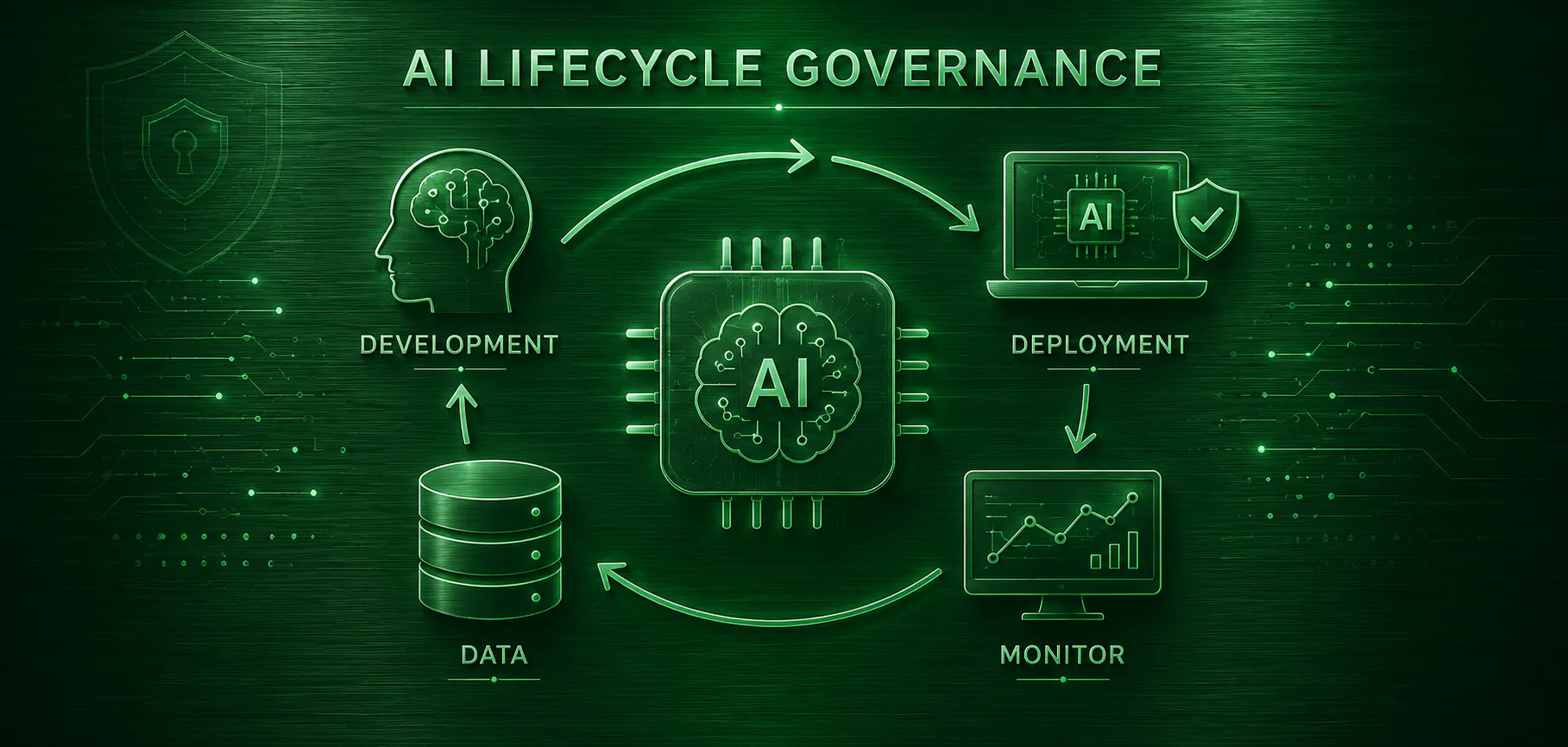
AI governance works by embedding a structured set of policies, controls, risk assessments, and accountability mechanisms into every stage of an AI system's life — from initial use-case approval through data collection, model development, deployment, and eventual retirement. It is not a one-time compliance gate before launch. It is a continuous operating discipline that runs in parallel with every technical decision the AI system makes. The goal is to ensure AI systems remain reliable, fair, explainable, and legally compliant as they evolve — and to produce the documented evidence that regulators, auditors, and customers can verify when they ask for proof.